ACLJ Secures Another Victory for Louisville Sidewalk Counselors
Listen tothis article
The U.S. Court of Appeals for the Sixth Circuit has delivered another victory for the ACLJ and our clients, Edward Harpring and Mary Kenney, in their years-long battle to protect the constitutional rights of sidewalk counselors in Louisville, Kentucky.
The latest ruling followed our clients’ successful constitutional challenge to Louisville’s sweeping “buffer zone” ordinance. Although the most recent dispute involved the consequences of that victory, the court of appeals made clear that their success was neither technical nor symbolic. Our clients secured precisely what they sought – a permanent injunction protecting their First Amendment free speech rights and the rights of others.
Compassionate Speech Is Constitutionally Protected Speech
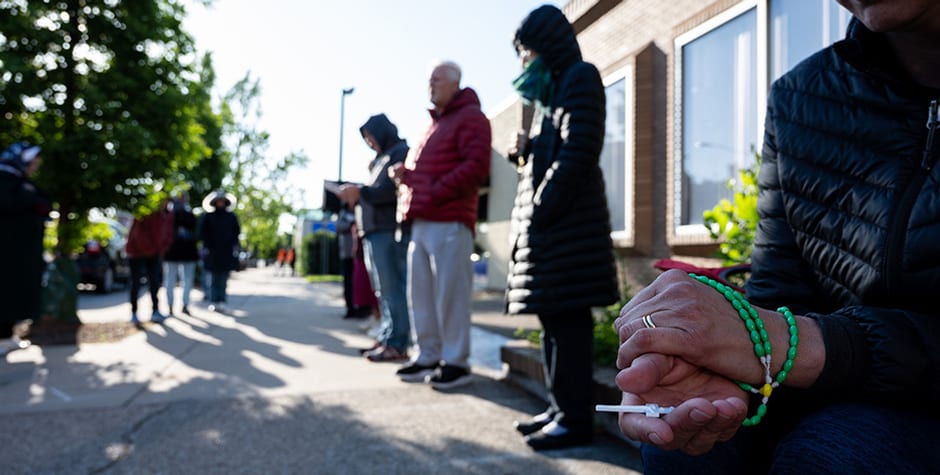
Edward and Mary engaged in sidewalk counseling outside a notorious Louisville abortion clinic that has since closed in the wake of the Dobbs decision. Their ministry was peaceful and personal: speaking quietly with women, distributing literature, offering information about alternatives to abortion, and praying for mothers and their unborn children.
Louisville’s ordinance established a 10-foot buffer zone at healthcare-facility entrances and prohibited ordinary members of the public from entering or remaining in the zone. For sidewalk counselors, however, physical proximity is critical. Their ministry depends on brief, one-on-one encounters – not shouting from a distance. A seemingly modest buffer zone can eliminate the quiet conversation that sidewalk counseling requires.
The ACLJ Took the Case to Sixth Circuit – and Won
After the district court initially declined to block the ordinance, the ACLJ appealed. In 2022, the Sixth Circuit reversed, concluding that Louisville’s restrictions likely violated the First Amendment, and ordered the ordinance preliminarily enjoined.
The court held that the government already possessed ample authority to prohibit obstruction, intimidation, and interference with access to healthcare facilities. What it could not do was impose a sweeping restriction on protected speech without showing that less speech-restrictive alternatives would be inadequate.
The case then returned to the district court. After months of further proceedings, the district court granted final judgment in favor of Edward and Mary on their Free Speech claim and permanently enjoined Louisville from enforcing its buffer-zone ordinance.
That was complete and enduring constitutional relief. Although the facility where Edward and Mary originally offered counsel has closed, the ordinance remains on the books and the permanent injunction remains in force. The city therefore cannot enforce it against Edward and Mary – or anyone else engaged in peaceful First Amendment activity – outside any Louisville healthcare facility, including Planned Parenthood.
The Sixth Circuit Rejects Attempt To Minimize the Victory
Despite that result, the district court later characterized our clients’ success as merely a “technical” victory. The Sixth Circuit rejected that characterization. As the court explained, “The free-speech injunction amounts to the only permanent barrier between the actions of the claimants and potential liability.”
When citizens prevent the government from enforcing an unconstitutional law, their victory is not insignificant simply because it produces no monetary judgment. Protecting constitutional liberty is not merely meaningful relief; it is among the most important relief a court can grant.
The Fight for Sidewalk Counselors Continues
The ACLJ has long defended sidewalk counselors because their work lies at the intersection of two fundamental principles: protecting innocent human life and preserving the freedom to express deeply held convictions in the public square.
Across the country, governments continue to consider laws that push pro-life advocates farther from the people they hope to reach. Such burdens on peaceful speech must be supported by evidence and carefully tailored to actual problems. Governments may not treat quiet counselors as though they were obstructive or violent protesters.
Sidewalk counselors do not surrender their constitutional rights when they approach an abortion facility. The First Amendment protects their right to offer women hope, practical support, and lifesaving alternatives.
This latest Sixth Circuit victory is another reminder that peaceful speech, prayer, and ministry on public sidewalks are not government favors. They are constitutional freedoms – and we will continue fighting to protect them.