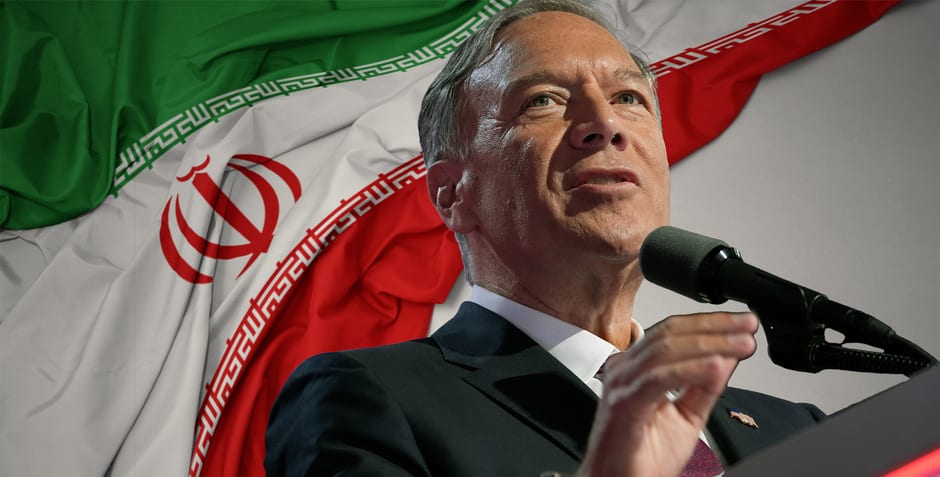
Let’s Finish the Job in Iran
Listen tothis article
Two weeks into the resumption of U.S. strikes on Iran and the reimposition of our blockade, is this war winnable – and was it worth it?
It’s a question I’m often asked, and my answer has become pretty predictable: It will end with American victory, provided we exert the sustained pressure required to break the regime’s ability to threaten America and the broader region. President Trump and Secretary Rubio’s recent statements about a potential U.S. “massive attack” as part of President Trump’s “head for an eye” strategy are a promising sign that the Administration is preparing to do just that.
As a former Army officer and Secretary of State, I know from personal experience that these things are easier said than done. But I’ve also seen up close what American power can achieve when it is backed by a clear and consistent strategy and a willingness to stick to our guns.
It’s clear that our war aims will not be achieved through diplomacy. The death of the Memorandum of Understanding (MOU) between Iran and the United States was inevitable. The Iranian regime never abided by the terms of the MOU, just as it has never upheld its end of a diplomatic agreement. It is ideologically committed to the destruction of the United States and the values we hold dear, and the regime’s survival depends upon the use of hostage tactics and rebuilding its nuclear program.
In short: This is not the kind of government we can do business with.
It’s worth reiterating that it is the Islamic Republic that has been at war with the United States for nearly 50 years; we just didn’t want to acknowledge it. The question was not if the world would have to deal with Iran, but when. President Trump was absolutely correct to take action to defang this threat once and for all.
But of course, wars rarely – if ever – go according to plan, and the enemy always gets a vote. Iran used its proximity to the Strait of Hormuz as a means of holding the international community hostage, just as it used its proxy forces to raise the costs of war beyond its own borders. This imposed real pain on the international economy, but also underscored the extent to which long-term energy price stabilization and global economic stability depend on permanently ending the Iranian threat.
That’s a test we cannot afford to fail. If America caves to these tactics, the deterrence that President Trump has worked so hard to reestablish will be destroyed, and the expectation of free and open sea lanes that America has striven to protect will be shattered.
So what’s the solution? Simply put: We need to finish the job.
It’s true that the Iranian regime has managed to survive despite the decapitation of its military and political leadership, destruction of much of its military capabilities, and extreme economic pressure. And unfortunately, under the terms of the MOU, the dictatorship benefited from a fresh injection of cash from sanctions waivers, and had time to regroup and rebuild both its military capabilities and domestic control.
But it’s also true that the Islamic Republic is in dire straits. The regime is fractured, its military capacity has been curtailed, and the region has been reshaped by American resolve – that’s real and it matters. Given sustained kinetic and economic pressure, this dictatorship will break.
We must start, as the President has correctly identified, with opening the Strait and making it clear to Iran and all bad actors that blackmail tactics will not be tolerated. We should fully resume our maximum pressure campaign to choke off Iran’s access to the resources it needs to survive. We should go after the IRGC and military capabilities, as well as critical infrastructure.
We should use covert operations – in partnership with our friends in the Mossad – to exploit and exacerbate fractures in the leadership. We should ramp up the pressure on Tehran’s proxies throughout the region, which it uses as a form of leverage over the United States and Israel. Holding Iran responsible for attacks on shipping by the Houthis is an important step, and Israel should have the space it needs to finish the task of neutralizing Hezbollah in Lebanon.
And diplomatically, we can continue to isolate the Iranian regime by strengthening cooperation with our Gulf Arab allies and Israel, and by forging ahead with incentivizing our Muslim partners to normalize relations with Israel and join the Abraham Accords.
No one wants a “forever war.” But ironically, that is precisely what continued inaction and appeasement will deliver. We know that when President Trump puts his mind to something, great things happen. Let’s get the job done.