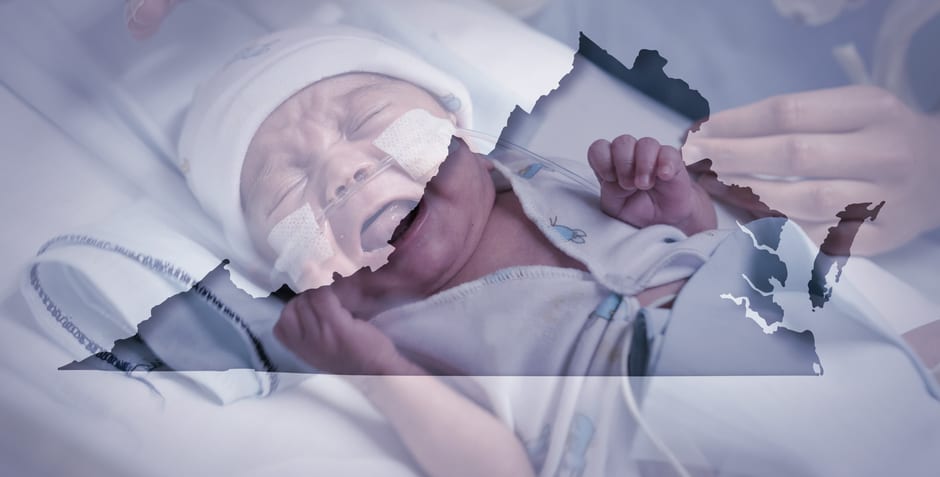
Virginia Voters Are Being Asked To Vote for a Sweeping Right to Unlimited Abortion
Listen tothis article
This November, Virginia voters will decide whether to place a fundamental right to abortion into the Virginia Constitution.
Proposed Constitutional Amendment Question 1 is being presented to voters as protecting “reproductive freedom.” But the actual amendment goes much further than the language on the ballot suggests. It would establish abortion as a fundamental right, make existing protections for parental notice vulnerable to constitutional challenge, and significantly limit Virginia’s ability to protect unborn children, including during the third trimester.
The ACLJ has long fought to protect the sanctity of life. We believe every unborn child has value and is entitled to protection.
That principle is consistent with the foundation of our nation itself. The Declaration of Independence recognizes that all people are endowed by their Creator with unalienable rights, beginning with life. Government does not create that right. Its responsibility is to protect it.
If Virginia voters approve Question 1, it would move the Commonwealth in the opposite direction.
The Ballot Does Not Tell Virginians Everything They Are Voting On
The ballot question asks Virginians whether the state constitution should be
amended to (i) protect the freedom to make personal decisions about prenatal care, childbirth, postpartum care, birth control, abortion, miscarriage management, and fertility care; (ii) protect doctors, nurses, and patients from being punished for these decisions; and (iii) allow for restrictions on access to abortion during the third trimester of pregnancy except when the patient’s health is at risk or the pregnancy cannot survive?
However, that description leaves out important provisions contained in the actual amendment.
The proposed constitutional text states that “every individual has the fundamental right to reproductive freedom.” It then provides that this right “shall not be, directly or indirectly, denied, burdened, or infringed upon” unless Virginia satisfies a demanding constitutional standard. The amendment also narrowly defines what qualifies as a compelling state interest. The government action must maintain or improve the health of the individual seeking reproductive care, be consistent with accepted clinical standards and evidence-based medicine, and must not infringe on the individual’s autonomous decision-making.
What is missing? The protection of unborn human life is not identified as a compelling state interest.
The ballot also tells Virginians that third-trimester restrictions could apply unless the patient’s “health is at risk.” The actual constitutional language specifically protects abortions that a physician determines are medically indicated to protect the woman’s “physical or mental health.”
Voters are not being asked to approve the abbreviated description on the ballot. They are being asked to place the actual language into Virginia’s Bill of Rights.
Take action with the ACLJ. Sign our petition: End Infanticide – Protect Babies Born Alive.
Parents Should Be Alarmed
The threat to parental rights is another major concern.
Virginia law currently requires parental consent or judicial authorization before an abortion, generally, can be performed on an unemancipated minor, subject to specified exceptions.
The proposed amendment contains no parental-rights protection. Instead, it states “every individual” possesses the fundamental right to reproductive freedom. It does not state every “adult.”
If Question 1 passes, Virginia’s parental involvement requirements could immediately become vulnerable to a constitutional challenge. A minor seeking an abortion could argue that requiring parental consent, notification, or judicial authorization “directly or indirectly” burdens the fundamental right that Virginia voters placed in the constitution.
That does not mean the existing parental consent law automatically disappears the day the amendment takes effect. But it does create a new and powerful constitutional argument against parental consent laws.
In practice, parents are expected to be involved in significant medical decisions affecting their minor children. Yet when the decision involves abortion, Question 1 could be used to argue that parental involvement unconstitutionally burdens the child’s independent right.
This concern becomes even more serious when a pregnancy involves sexual abuse, statutory rape, coercion, or trafficking. Parents are often the first people capable of recognizing that something is wrong, and that their child needs protection from further exploitation. Virginia should strengthen those protections, not put them at constitutional risk.
Could This Amendment Threaten Religious Liberty and Pro-Life Speech?
There is another phrase in the amendment that Virginians should examine carefully.
Question 1 states the Commonwealth may not “directly or indirectly” deny, burden, or infringe the newly created fundamental right to reproductive freedom.
What constitutes an “indirect” burden? The amendment does not define that term. That ambiguity could matter when abortion rights come into conflict with religious liberty and free speech.
Could a government-funded Christian organization face consequences because it refuses to facilitate or refer for abortions? Could a licensed Christian counselor face regulatory action for counseling a woman against abortion? Could a Pregnancy Resource Center be targeted because its mission is to encourage women to choose life?
We do know this. Question 1 cannot override the First Amendment. And the Supreme Court has already protected pro-life speakers when government crossed that constitutional line. The proposed amendment ignores legal precedent.
In National Institute of Family and Life Advocates v. Becerra, the Supreme Court struck down California requirements that compelled pro-life pregnancy centers to provide government-prescribed notices concerning abortion services. The Court rejected California’s attempt to diminish the First Amendment protection afforded to this type of speech.
Likewise, in McCullen v. Coakley, the Supreme Court struck down a Massachusetts law creating buffer zones around abortion facilities because it burdened substantially more speech than necessary. The case involved individuals who sought to speak personally with women entering abortion facilities and offer alternatives to abortion.
Virginia cannot create a constitutional right to abortion that overrides the federal constitutional rights of those who oppose abortion. But Question 1 would add broad language to Virginia’s Constitution protecting abortion from even “indirect” government burdens without explaining how that provision will interact with the rights of pastors, Christian counselors, Pregnancy Resource Centers, healthcare professionals, and pro-life advocates.
Virginians deserve an answer to that question before the language becomes part of their constitution.
Late-Term Abortion Could Become Virtually Beyond the Reach of Virginia Law
The amendment’s treatment of third-trimester abortion is a red flag.
Supporters say that Question 1 technically allows third-trimester regulation. But that does not tell the whole story. The amendment immediately restricts that authority – and one could argue effectively eliminates it.
Under the actual text, Virginia could not prohibit a third-trimester abortion when a physician determines, in their professional judgment, that the abortion is medically indicated to protect the pregnant woman’s life, physical health, or mental health. Virginia also could not prohibit the abortion when the physician determines that the unborn child is not viable. This language would be permanently enshrined in the constitution. The Virginia legislature could not simply change it through ordinary legislation.
The result would be that meaningful prohibitions on a significant category of third-trimester abortions could be placed effectively beyond the Commonwealth’s reach. Even a third-trimester law enacted by the people’s elected representatives would remain constitutionally subject to the physician-determined physical or mental health exception.
Telling voters that Virginia will retain the ability to “restrict” third-trimester abortions is at best misleading. And it also raises a larger concern about Virginia becoming a destination for abortion.
We have already seen how the abortion industry adapted after Dobbs. States that expanded abortion access have increasingly served women traveling from states that enacted stronger protections for unborn children. We have also seen abortion providers use chemical abortion and interstate distribution to attempt to extend abortion into pro-life states.
If surrounding states enact stronger protections for unborn children while Virginia constitutionalizes abortion and limits its ability to regulate late abortions, Virginia could increasingly become an abortion destination.
What About Women Coerced Into Abortions?
There is another side of “reproductive freedom” that deserves attention – abortion coercion.
There have been numerous criminal cases involving men who allegedly obtained abortion drugs and secretly administered them to pregnant women who wanted to carry their children. Abuse and coercion can also occur when a boyfriend, husband, trafficker, or the adult responsible for a minor’s pregnancy pressures her to obtain an abortion.
While nothing in the amendment legalizes, or in any way condones, coercion, assault, sexual abuse, trafficking, or secretly administering abortion drugs, making abortion easier to obtain eliminates evidence that might expose an illegal and abusive sexual relationship.
This should raise serious questions. How will Virginia determine whether a frightened minor is acting voluntarily? Will existing abuse reporting requirements for medical providers remain fully enforceable when they intersect with the potential new constitutional right? What happens when an adult who arranged or transported a minor for an abortion claims constitutional protection for assisting her? And will Virginia retain sufficient authority to investigate whether an abortion is being used to conceal abuse, statutory rape, or trafficking?
The amendment does not answer those questions.
Virginia must be able to protect women and girls from people who will use abortion to conceal their crimes. No constitutional amendment should make it more difficult to investigate abuse, determine whether consent is genuine, allow parents to protect their children, or hold predators accountable.
The Right to Life Is Worth Defending
At the ACLJ, our position has not changed.
Unborn children deserve protection. Women deserve real support when facing difficult pregnancies. Parents deserve to remain involved in consequential decisions affecting their minor children. And elected representatives should be able to enact reasonable protections for human life without being stopped by an expansive constitutional abortion right that voters were not fully informed about.
The abortion industry has not stopped pursuing its objectives since Dobbs. It has changed strategies. We have seen expanded chemical abortion, interstate distribution of abortion drugs, litigation against pro-life laws, and efforts to establish broader abortion rights at the state level.
The Virginia constitutional amendment question is another one of those battlegrounds.
If this amendment passes, we stand ready to fight in court, in the legislature, and wherever else necessary to defend them.
Take action with the ACLJ. Sign our petition: End Infanticide – Protect Babies Born Alive.