Stories That Demand Action: Confronting Religious Persecution at the IRF Summit
Listen tothis article
Last week I spoke on a panel at the International Religious Freedom (IRF) Summit in Washington, D.C.—a global gathering that brings together advocates, policymakers, and legal experts from around the world who are on the front lines of defending religious freedom. The Summit provides a rare forum to share firsthand experiences, expose ongoing abuses, and coordinate efforts to protect the fundamental right to live out one’s faith without fear.
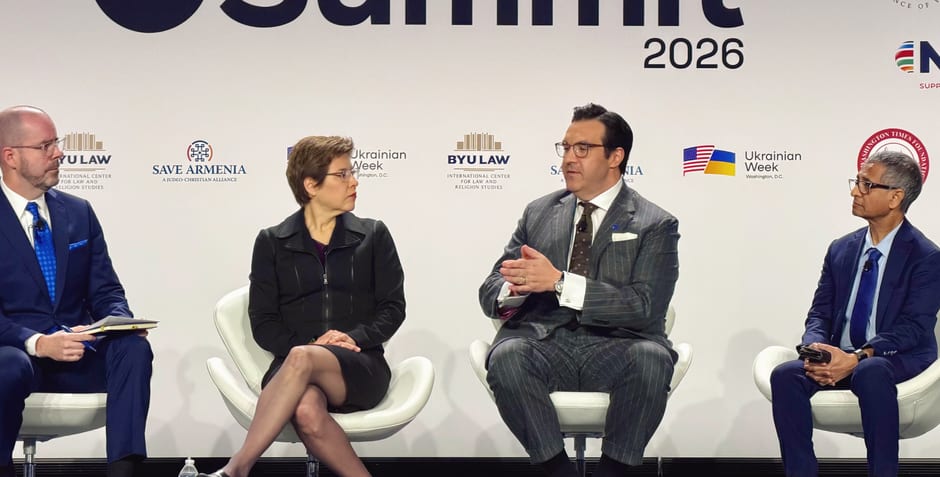
During the first plenary session, our Executive Director, Jordan Sekulow, emphasized the critical importance of telling the individual stories of persecuted people and families – and of remaining persistent in the work of defending religious freedom.
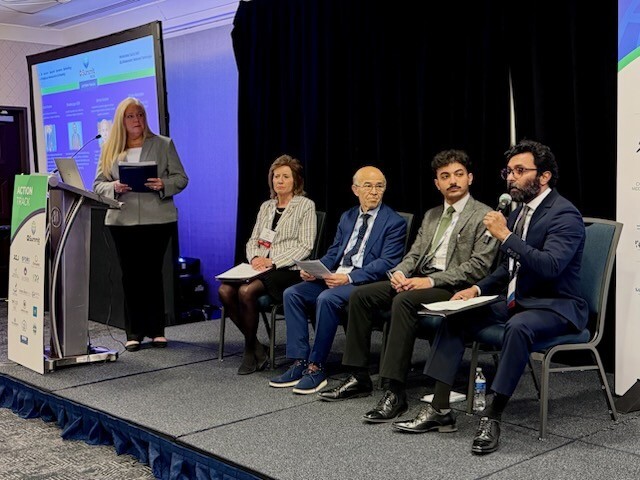
I later participated in a panel moderated by my colleague CeCe Heil, where we highlighted the case of Shahzad Masih. We urged the human rights advocates in attendance to join us in calling on Pakistan to deliver justice for Shahzad, who has spent more than eight years imprisoned on a false allegation of blasphemy.
Despite the lack of credible evidence, Shahzad remains on death row, still waiting for the High Court to hear his appeal—a stark reminder of the human cost of religious persecution and the urgency of continued international advocacy.
Our legal team in Pakistan recently filed formal applications with the Chief Justice of the Supreme Court of Pakistan, the Chief Justice of the Lahore High Court, and the Federal Minister for Law and Justice, urging them to use their authority to schedule Shahzad’s long-delayed appeal hearing. Since his conviction in November 2022, we have petitioned the High Court at least four times. Hearings were scheduled – then postponed. While delays are common due to Pakistan’s massive case backlog, in Shahzad’s case, every delay deepens an injustice that should never have occurred.
Take action with the ACLJ and add your name to the petition: Defend Dying Christian in Pakistan.
The panel’s primary purpose, however, was not only to expose persecution but to highlight what sustained, strategic advocacy can accomplish. I shared how our sixteen years of persistent legal work in Pakistan have produced real results – especially for the most vulnerable. In one recent case, we represented a three-year-old Christian girl who was sexually assaulted. After prosecuting the perpetrator at trial, the court sentenced him to twenty-five years in prison – a conviction we successfully defended on appeal. In another case, involving the rape of a nine-year-old Christian girl, we secured a sentence of life imprisonment for the attacker.
In Pakistan, the law allows a victim’s private attorney to actively participate alongside the state in prosecuting the perpetrator. This critical procedural right is what enables us to vigorously advocate for our clients.
One of the core purposes of the IRF Summit is to equip advocates with practical tools to defend those who are discriminated against or persecuted for their faith. During the panel, I shared how we work with our team in Pakistan—reviewing legal filings, strengthening case strategy, and preparing attorneys for oral arguments—to ensure these cases are pursued with rigor and effectiveness.
Based on the thoughtful questions and feedback we received at the conclusion of the session, it was clear that our presentation resonated and that these strategies can be applied far beyond Pakistan to protect lives and advance religious liberty around the world.
We are grateful to the International Religious Freedom Summit for the opportunity to participate and for its continued leadership in this vital work.