Biden’s Inept Ukraine Policy on Full Display at the UN
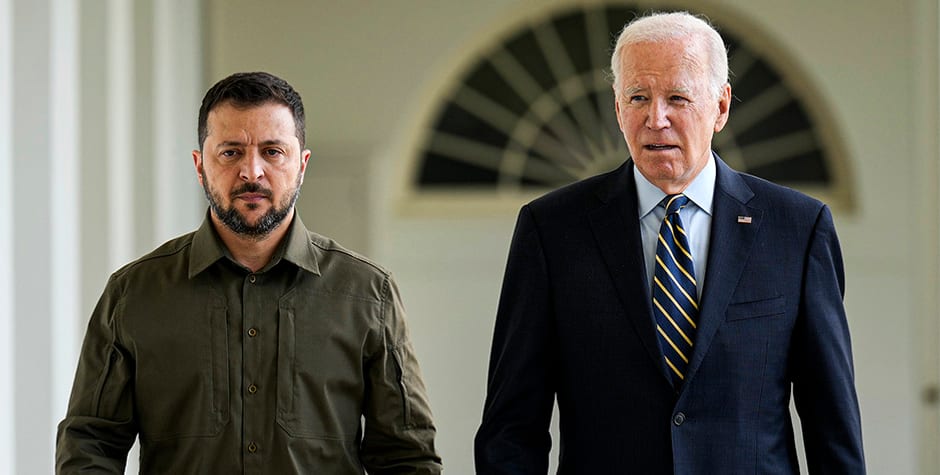
In his remarks to the U.N. General Assembly meeting this week, President Biden predictably spoke about continued U.S. support for Ukraine while giving scant indication that his Administration has any plans to change its failed approach. In fact, the day before President Zelenskyy was set to visit the White House, the Biden Administration announced it would not be providing a weapons system to the Ukrainians that could help them win. This was disappointing; although President Biden was speaking to an international audience at the U.N., the more important audience for his remarks was here at home. The American people – especially conservatives – are beginning to evince less support for continued aid to Ukraine, evidenced by House GOP opposition to the latest proposed supplemental support package. Skepticism will continue to increase unless our leaders can convince the American people that helping Ukraine win is a worthy goal, and they can prove we have a strategy to achieve it. If our leaders cannot do so – or are uninterested in doing so, as has clearly been the case with President Biden – it will not matter what the President says at the U.N. or even who is in office.
Frankly, skepticism is warranted given President Biden’s track record thus far. In the year that transpired between Biden’s inauguration and Putin’s invasion, the Biden Administration appeased Russia on energy policy, arms control policy, and Ukraine. Its botched withdrawal from Afghanistan telegraphed profound weakness and unseriousness. President Biden followed this embarrassment by suggesting he could tolerate a “minor incursion” into Ukraine by Russia.
A major invasion is what he greenlit, and the missteps continued: The same intelligence agencies that failed to predict the speed of the Taliban victory in Afghanistan confidently asserted that Putin would take Kyiv in a matter of days, and so President Biden withdrew our diplomats and prepared to accept another defeat. As it became obvious the Ukrainians would fight, the Administration grudgingly came around to provide them with support. Yet each new round of support has been dominated by hand-wringing over whether certain aid would provoke Vladimir Putin, thus greatly weakening its impact and broadcasting further weakness. Putin still feels he retains good leverage, while Ukraine lacks the tools it needs to end the war decisively. This has led to a stalemate. A different approach is necessary.
We should be clear: No one knows when and how the war will end – but we do know any outcome that plausibly constitutes a victory for Russia would be catastrophic for American security. A Russian victory would raise the chances of an expanded war in Europe, with Putin contemplating the seizure of more lost elements of the Russian empire, whether in whatever is left of Ukraine or beyond. It would be taken as proof by the Chinese Communist Party that America is unserious, making a war in the Pacific more likely. In general, it would give comfort and confidence to those who hate America, not just in Moscow and Beijing, but also in Tehran and Pyongyang. Putin’s recent summit meeting with Kim – the North Korean dictator’s first foreign trip in four years – is the latest indication of a solidifying Eurasian axis hostile to America’s interests and those of our friends. Our friends, including in places like Canberra, Tokyo, Seoul, and Taipei, all of whom support Ukraine with aid, would rightly see our abandonment of Ukraine as notice that they are on their own.
Fears that Ukraine will devolve into an “endless war” are understandable, but misguided. It is Ukraine, not America, that is at war. It is Ukrainians who are fighting and dying for their freedom, and not one American serviceman has been a casualty in Ukraine’s war of self-defense – a war we are supporting with a tiny percentage of our overall defense spending. This has degraded the power of a hostile Russia that aspires, in open cooperation with China, to establish a new world order in which America’s freedom and prosperity are radically diminished.
Under the leadership of Ronald Reagan, conservatives won the Cold War and earned the trust of generations of Americans by pressing the case that freedom and prosperity at home are linked to the security and stability of Europe and Asia. Succumbing now to the isolationist temptation or to the related temptation that we can simply wash our hands of European responsibilities in order to focus on Asia, despite the clear alignment of Russia and China, will make Americans less safe. It is in America’s interest to help Ukraine achieve victory and deny Russia’s aggression, and it is every leader’s responsibility to present these facts to the American people.
Support the work of the ACLJ as we continue to bring you expert analysis and legal action on the issues that matter most.