ACLJ Files at Seventh Circuit After City Targeted Pro-Life Speech – and City Official Confirmed It
Listen tothis article
Since our founding, the ACLJ has stood on an unwavering conviction that every human life – from the moment of conception – is sacred, made in the image of God, and worthy of protection. That conviction is why we go to court. It is why we fight. And it is why we will never stop defending the men and women who stand on sidewalks outside abortion facilities, offering hope, truth, and the love of Christ to women in crisis.
Today, that fight has reached the United States Court of Appeals for the Seventh Circuit. The ACLJ just filed our opening brief in Hamman v. City of Carbondale.
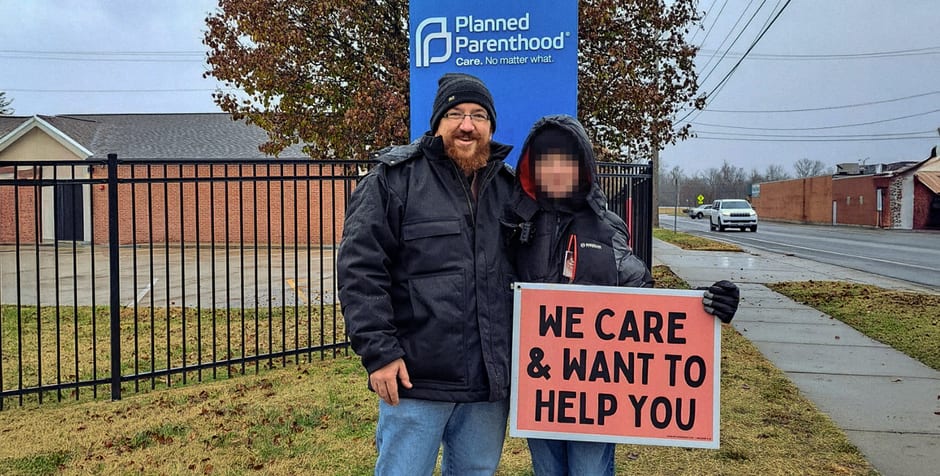
As we told you when we filed this appeal, on April 16, 2025, our client, Brandon Hamman – a dedicated pro-life missionary and sidewalk counselor with Gospel for Life – was peacefully standing outside the CHOICES abortion facility in Carbondale, Illinois, with small yard signs reading “Love Your Preborn Neighbor as Yourself” and “We Will Adopt Your Baby.” These weren’t just signs. They were lifelines of hope – messages proclaiming that every preborn child matters, that alternatives to abortion exist, and that no woman facing an unplanned pregnancy has to face it alone. And the city of Carbondale mobilized six government officials to tear them out of the ground.
No citation was ever issued. But Brandon was silenced. Every woman who drove past that clinic that day and never saw those signs may never know the help that was there, waiting for her. And we refused to let that stand.
The district court denied our motion for a preliminary injunction, ruling that Carbondale’s sign ordinance was a permissible, content-neutral restriction. That ruling was wrong – on four independent constitutional grounds – and our brief to the Seventh Circuit makes that case with the full weight of the evidentiary record behind it.
The Ordinance Is Unconstitutionally Vague. As the Supreme Court established in Connally v. General Construction Co., a law whose terms are so unclear that people of ordinary intelligence must guess at its meaning violates the most basic requirements of due process. Carbondale’s sign ordinance does exactly that. It prohibits signs in the “public right of way” – but nowhere defines what that term means. The city’s own municipal code contains three different definitions of “right of way,” each with a different scope. The result? Three different city officials gave three different interpretations of the law in a 40-minute window, all while repeatedly calling the city attorney for guidance. Even the supervising officer on scene called the situation “a very gray, touchy area.” Laws that trained law enforcement cannot apply without constant legal consultation are unconstitutional – and they have no place in a city square where people are trying to share the truth about human life.
The Ordinance Is Not Narrowly Tailored. The Seventh Circuit made clear in Luce v. Town of Campbell that when a government cannot justify why signs pose any actual traffic hazard, it cannot simply ban them. Yet that is precisely what Carbondale did. The city’s sweeping interpretation bans a two-foot yard sign planted in the grass 20 feet from a curb – while permitting sidewalk restaurants, block parties, and commercial signs in those exact same public spaces. Brandon himself testified that staked signs are safer than carried signs, because carried signs blow into traffic. The city presented no studies, no accident reports, and no expert testimony to justify its blanket prohibition. That evidentiary void cannot be filled with speculation – and it cannot be used to silence the pro-life message.
The Ordinance Is Content-Based. Under the Supreme Court’s landmark ruling in Reed v. Town of Gilbert, a law is content-based if officials must read a sign’s message to decide whether it’s permitted. That is precisely what Carbondale’s ordinance requires. The district court’s own interpretation permits commercial signs for restaurants, block parties, and sidewalk sales in the same public spaces where Brandon’s message – “We Will Adopt Your Baby” – was banned. That is not content neutrality. That is the government elevating commercial speech above the most important speech there is: the proclamation that preborn lives have infinite worth.
The Ordinance Was Enforced Through Viewpoint Discrimination. This is the most powerful part of our record – and it is remarkable. Sergeant Mark Murray, a veteran of the Carbondale Police Department, testified under oath that, based on his direct experience with the city’s institutional priorities, “[I]f it’s more of a right-wing belief it’s discouraged.” He said, plainly, “I’m sure it’s viewpoint discrimination.” No city official contradicted him. Not one. The city manager had proactively emailed the community development manager that morning to direct enforcement against signs at the abortion facility. The city attorney’s first question when alerted to the enforcement action was whether the demonstrators were affiliated with the Coalition for Life – the pro-life group that had previously sued Carbondale. It is direct, on-the-record evidence that Carbondale targeted Brandon’s signs because of what they said and whose side they were on.
Every day Brandon cannot stake those signs in the ground is a day the truth about life goes unspoken. Every woman who drives past CHOICES without seeing that help is available is a loss that no court order can undo. Brandon has a right to stake his signs in the ground, to speak to women in crisis, and to proclaim the Gospel in the public square. The sanctity of human life demands nothing less.
Join us in defending Brandon Hamman’s free speech – sign our petition.
Since our founding, the ACLJ has stood on an unwavering conviction that every human life – from the moment of conception – is sacred, made in the image of God, and worthy of protection. That conviction is why we go to court. It is why we fight. And it is why we will never stop defending the men and women who stand on sidewalks outside abortion facilities, offering hope, truth, and the love of Christ to women in crisis.
Today, that fight has reached the United States Court of Appeals for the Seventh Circuit. The ACLJ just filed our opening brief in Hamman v. City of Carbondale.
As we told you when we filed this appeal, on April 16, 2025, our client, Brandon Hamman – a dedicated pro-life missionary and sidewalk counselor with Gospel for Life – was peacefully standing outside the CHOICES abortion facility in Carbondale, Illinois, with small yard signs reading “Love Your Preborn Neighbor as Yourself” and “We Will Adopt Your Baby.” These weren’t just signs. They were lifelines of hope – messages proclaiming that every preborn child matters, that alternatives to abortion exist, and that no woman facing an unplanned pregnancy has to face it alone. And the city of Carbondale mobilized six government officials to tear them out of the ground.
No citation was ever issued. But Brandon was silenced. Every woman who drove past that clinic that day and never saw those signs may never know the help that was there, waiting for her. And we refused to let that stand.
The district court denied our motion for a preliminary injunction, ruling that Carbondale’s sign ordinance was a permissible, content-neutral restriction. That ruling was wrong – on four independent constitutional grounds – and our brief to the Seventh Circuit makes that case with the full weight of the evidentiary record behind it.
The Ordinance Is Unconstitutionally Vague. As the Supreme Court established in Connally v. General Construction Co., a law whose terms are so unclear that people of ordinary intelligence must guess at its meaning violates the most basic requirements of due process. Carbondale’s sign ordinance does exactly that. It prohibits signs in the “public right of way” – but nowhere defines what that term means. The city’s own municipal code contains three different definitions of “right of way,” each with a different scope. The result? Three different city officials gave three different interpretations of the law in a 40-minute window, all while repeatedly calling the city attorney for guidance. Even the supervising officer on scene called the situation “a very gray, touchy area.” Laws that trained law enforcement cannot apply without constant legal consultation are unconstitutional – and they have no place in a city square where people are trying to share the truth about human life.
The Ordinance Is Not Narrowly Tailored. The Seventh Circuit made clear in Luce v. Town of Campbell that when a government cannot justify why signs pose any actual traffic hazard, it cannot simply ban them. Yet that is precisely what Carbondale did. The city’s sweeping interpretation bans a two-foot yard sign planted in the grass 20 feet from a curb – while permitting sidewalk restaurants, block parties, and commercial signs in those exact same public spaces. Brandon himself testified that staked signs are safer than carried signs, because carried signs blow into traffic. The city presented no studies, no accident reports, and no expert testimony to justify its blanket prohibition. That evidentiary void cannot be filled with speculation – and it cannot be used to silence the pro-life message.
The Ordinance Is Content-Based. Under the Supreme Court’s landmark ruling in Reed v. Town of Gilbert, a law is content-based if officials must read a sign’s message to decide whether it’s permitted. That is precisely what Carbondale’s ordinance requires. The district court’s own interpretation permits commercial signs for restaurants, block parties, and sidewalk sales in the same public spaces where Brandon’s message – “We Will Adopt Your Baby” – was banned. That is not content neutrality. That is the government elevating commercial speech above the most important speech there is: the proclamation that preborn lives have infinite worth.
The Ordinance Was Enforced Through Viewpoint Discrimination. This is the most powerful part of our record – and it is remarkable. Sergeant Mark Murray, a veteran of the Carbondale Police Department, testified under oath that, based on his direct experience with the city’s institutional priorities, “[I]f it’s more of a right-wing belief it’s discouraged.” He said, plainly, “I’m sure it’s viewpoint discrimination.” No city official contradicted him. Not one. The city manager had proactively emailed the community development manager that morning to direct enforcement against signs at the abortion facility. The city attorney’s first question when alerted to the enforcement action was whether the demonstrators were affiliated with the Coalition for Life – the pro-life group that had previously sued Carbondale. It is direct, on-the-record evidence that Carbondale targeted Brandon’s signs because of what they said and whose side they were on.
Every day Brandon cannot stake those signs in the ground is a day the truth about life goes unspoken. Every woman who drives past CHOICES without seeing that help is available is a loss that no court order can undo. Brandon has a right to stake his signs in the ground, to speak to women in crisis, and to proclaim the Gospel in the public square. The sanctity of human life demands nothing less.
Join us in defending Brandon Hamman’s free speech – sign our petition.