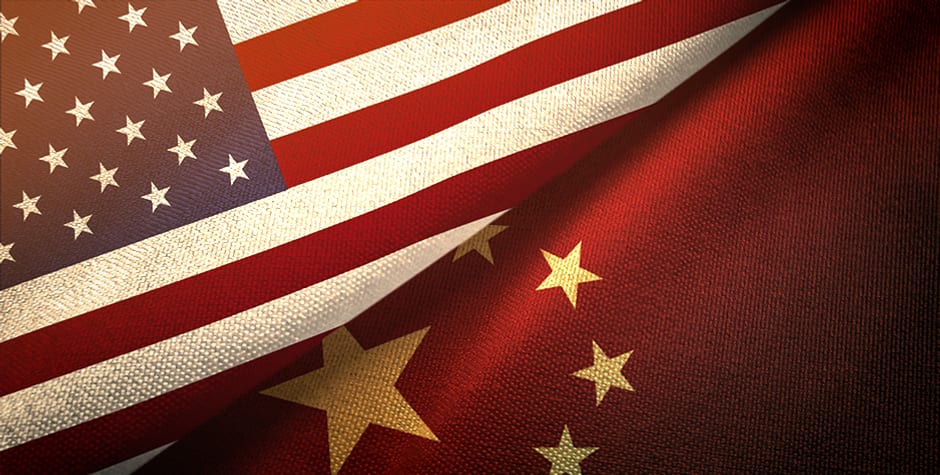
China's Grand Plan for Defeating America
Defeat comes in many forms. It does not always involve military defeat on the battlefield. A formal surrender is not always required. It does not require total subjugation by one nation over another. But defeat can be just as real and the consequences far-reaching for a nation.
China does not plan to launch a direct military attack on the United States. But they do plan to defeat the U.S. and markedly diminish our power and influence worldwide. The plan to overcome the U.S. is both explicit (Yes! They have written and spoken about it!) and implicit: They have a long road map where their policies and actions defeat the ability of the U.S. military to react to their aggression and of the U.S. economy to weather the overpowering strength of China’s economic and trade policies.
China’s President Xi and the Chinese Communist Party (CCP) have stated their goal of being the world’s only superpower. They are buying influence in Asia, Africa, and South America. They are establishing seaports around the world to support their large navy, which now includes two aircraft carriers. They now have more land-based launchers for nuclear weapons than the United States. A few years ago, they had 200 nuclear warheads. They now have approximately 1,000 nuclear warheads. They have the largest standing army in the world with an ever-increasing military budget.
Financially, China is prospering in ways that are the envy of much of the world. Of course, their wealth and growing economy are based on low wages for many of their own people, slave labor to build many of the products they export, and the widespread theft of intellectual property. They invent little technologically; they steal much. Because the U.S. has a budget deficit year after year and now is weighed down with over $30 trillion in debt—slated to grow exponentially over the next 5–10 years—we are not competing with China as we should. As a matter of fact, China has bought and holds over $1 trillion of the debt of the United States. Our trade deficit with China should be alarming: We buy much more from them than they do from us. We could go on and on.
The threat of military aggression by the Chinese Communists is real. President Xi has stated that if Taiwan does not willingly reunite with the mainland, they will take the island democracy by force. When one’s enemy makes such a statement, they should be taken at their word. China routinely violates Taiwan’s airspace and territorial waters, testing its defensive capabilities. They signed a cooperation agreement with Iran and last year signed a pact with the Russians for mutual support. In April, President Xi plans to travel to Russia, where he will meet with his ally Vladimir Putin. Russia, China, and Iran have participated in joint military exercises. China has constructed man-made islands in international waters in the South China Sea and built military bases there.
China’s 12-point plan for peace in Ukraine, released this week, is laughably hypocritical if it were not so serious. It calls for respecting the sovereignty of all countries—despite Putin’s refusal to respect Ukraine’s sovereignty. It calls for the safety of civilians and civilian facilities—even as Russia makes them targets. It demands protection for women and children, even though the rape and assault of Ukrainian women held in Russian-occupied territory is ongoing and Ukrainian children have been taken from their families and sent to Russia. It states the use, or threatened use, of nuclear weapons is unacceptable, even though Putin has repeatedly implied he might use them in Ukraine.
There are other provisions in China’s peace plan. Perhaps, the most disconcerting is China’s call for all sanctions against Russia to be lifted. China’s plan is to allow Putin to violate the norms of Humanitarian Law and the Law of War with impunity—no price to be paid for the atrocities and nothing to cause Putin to reconsider what he is doing.
In fact, China does not want the war in Ukraine to end—at least not yet. It is to China’s advantage that the U.S. continues to deplete its own arsenal by sending billions of arms and supplies to Ukraine. And our weapons and ammunition stockpile are being reduced. For example, we have sent so many 155 mm artillery rounds to Ukraine that the manufacturer for the U.S. cannot keep up with restocking our supply. The Pentagon initially stated that the M-1 Abrams tanks we agreed to send to Ukraine would have to come directly from the manufacturer so as not to impact U.S. supplies. This week, the Pentagon stated that they will likely send some tanks from our own arsenal of weapons. This is a small snapshot of the impact that our generosity with Ukraine is having on our own military readiness.
I am not advocating that we abandon Ukraine or quit assisting them in their fight for freedom. However, we are drastically reducing our ability to respond to China when they invade Taiwan. We need to be proactive in arming Taiwan as we are Ukraine—now. The most recent military aid package for Taiwan is years old with the weapons still not delivered to our Asian ally. We were—and still are—late in providing military assistance to Ukraine. We are even further behind with our support for Taiwan—something we are required by law to do under the Taiwan Relations Act. All this is unnecessary.
If we take the Ukrainian war seriously, as well as the threat to Taiwan posed by China, we should be on a wartime footing as it applies to our defense contractors and the production of weapons and ammunition. The world is on the brink of a wider war, both with the potential for escalation in Ukraine and a likely attack on Taiwan. For all of my 26 years in the Army, the strategy was for the U.S. to be able to fight wars on two fronts if necessary—even on opposite sides of the world. I do not believe we still possess that capability. But we should have that capability, and we could.
The Biden Administration must accept the reality of the threat environment we face. We must act, not react. We should prepare for war, even as we work for peace.
Support the work of the ACLJ as we continue to bring you expert analysis and legal action on the issues that matter most.