ACLJ Files Critical Amicus Brief Challenging a Dangerous Court Decision That Allows Universities To Promote Vile Antisemitism on Campus
Listen tothis article
The ACLJ has filed a critical amicus brief following the First Circuit Court of Appeals’ troubling decision in Stand WithUs Center for Legal Justice v. MIT. This decision severely undermines Jewish students’ protections under Title VI, offering colleges and universities a blueprint to evade responsibility for harassment and discrimination by recasting it as “political speech.” The ACLJ is urging the First Circuit to rehear the case and carefully consider the dangerous precedent this ruling sets.
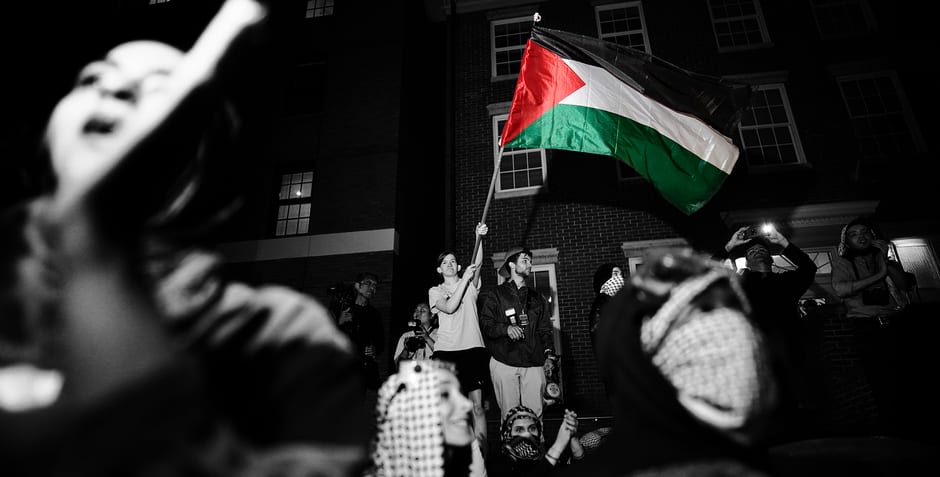
This case originated when students at MIT, a private university, held pro-Palestinian protests through rallies, walkouts, chalk messages, and an encampment near Hillel. Some Jewish and Israeli students felt unsafe amid reported harassment and obstruction. Jewish students brought suit against MIT. The district court dismissed the suit, and the First Circuit affirmed the dismissal.
Take action with us and add your name to the petition: Stop the Vile Pro-Hamas Protests on Campus.
In our amicus brief, we warn that the First Circuit’s ruling doesn’t just harm Jewish students, but it also threatens all minority groups protected under Title VI. Title VI of the Civil Rights Act of 1964 prohibits discrimination on the basis of race, color, or national origin by institutions that receive federal funding. Although Title VI does not explicitly mention religion, its application has long extended to Jewish students, especially when harassment is rooted in ethnicity, ancestry, or perceived national origin. As federal guidance has recognized, discrimination against Jews because of a connection to Israel or for their heritage falls squarely within Title VI’s reach. This principle was reinforced by President Trump’s Executive action: Executive order 13899 (2019) and its reaffirmation in Executive order 14188 (2025) directed agencies to consider the International Holocaust Remembrance Alliance’s (IHRA) definition of antisemitism when enforcing Title VI.
Yet in this MIT case, the First Circuit significantly weakened the “deliberate indifference” standard, a cornerstone of Title VI enforcement. Under prior interpretation, a school may be liable if it responds to harassment in a way that is not “reasonable,” especially when the conduct is severe, pervasive, and objectively offensive. Here, however, MIT’s response was minimal, superficial, and woefully inadequate. The Plaintiffs alleged protesters blocked access to campus buildings; set up encampments surrounded by high fences; and chanted explicitly antisemitic slogans such as “There is only one solution: Intifada revolution” and “death to Zionism.” Rather than disciplining or removing these individuals, the university advised Jewish students to avoid certain areas, thereby accommodating perpetrators while sidelining victims.
The ACLJ argues that this precedent sends a dangerous message: If a university takes any token action, no matter how ineffectual, it may avoid Title VI liability even if the hostile environment continues. By treating antisemitic conduct as “protected” speech, the court allows discrimination to flourish while stripping Title VI of its teeth.
Even more alarming is the First Circuit’s conflation of political expression and speech with discriminatory conduct. The school was able to skirt its Title VI obligations by claiming the antisemitic actions that took place were political speech about Israel. The ACLJ brief highlights how this framing erases the real intent and subsequent damaging impact. Chanting for “intifada” is not an abstract ideological debate; historically, “intifada” refers to violent uprisings, including terrorist attacks. The First Circuit’s reasoning effectively gives a pass to calls for violence or exclusion so long as they’re couched in political language. The ACLJ warns this is not just a theoretical problem: Any group seeking to harass a protected minority could simply cloak its behavior in political rhetoric.
To illustrate this danger, our brief offers a hypothetical involving another protected group. Imagine protesters outside a building on campus that houses Latin American cultural programs, claiming to advocate for “border security” or photographing students and demanding investigations into their immigration status. These protesters do not want Latino students on campus and want to make them feel as unwelcome as possible. Under the First Circuit’s logic, so long as the protesters frame their actions as political speech or expression, their conduct would be shielded, and the school could respond in minimal ways that leave the harassment unchecked.
For these reasons, the ACLJ is urging the First Circuit to rehear the case and consider the slippery slope that this precedent sets. We illustrate what effective Title VI enforcement should look like: institutions taking seriously their obligation to protect minority students, investigating complaints, and imposing real consequences when harassment or discrimination is found. The MIT ruling undermines all that by allowing superficial responses and political framing to shield abuse. By giving universities and perpetrators a road map to evade accountability, this decision threatens the civil rights protections of every minority group on campus and renders Title VI useless.
The ACLJ has been at the forefront of combating antisemitism across our nation’s university and college campuses. In December 2023, we sent a demand letter to five Ivy League schools, including MIT, calling out antisemitic encampments, chants, and violence – and reminding these institutions of their legal duties under Title VI. In earlier work, the ACLJ also filed a federal complaint against Georgia Tech on behalf of Jewish students who faced blatant antisemitism. Just recently, we stepped in and secured a victory on behalf of a Jewish student at New York Law School. Following our intervention, the school ordered the removal of antisemitic social media posts and took additional remedial action. All of these examples represent our mission of eradicating antisemitism across the nation and around the world.
The ACLJ stands for the rights of Jewish students nationwide. If you are a Jewish student experiencing antisemitism on your college campus, you are not alone, and we are here to help. Please contact us at ACLJ.org/HELP.