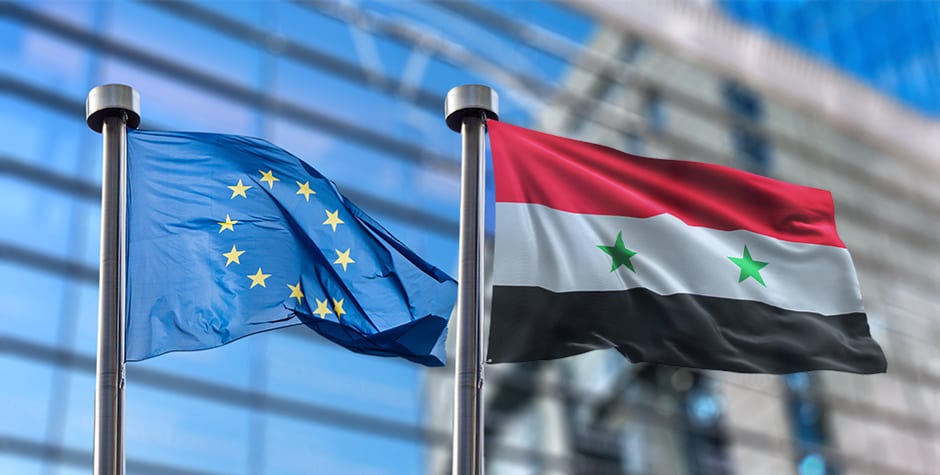
The European Union Must Protect Religious Communities in Syria
Listen tothis article
After the massacre of over 1,400 civilians in Syria’s coastal region, according to the latest count by the Syrian Observatory for Human Rights, the fragile illusion of post-Assad stability has been shattered. The horror began in Latakia, where members of Hayat Tahrir al-Sham (HTS), the now-ruling Sunni Islamist group, were killed by factions loyal to ousted President Bashar al-Assad.
The response was swift and ruthless, escalating into a devastating pogrom against Alawite civilians throughout the region. Alawites represent about 10% of Syria’s total population but are concentrated along the coast, where they form a majority. Under the pretext of suppressing a so-called “Alawite insurrection,” HTS forces and their allies launched a large-scale offensive, targeting Alawite communities in Tartus, Banias, and the mountainous villages around Qadmous.
Helicopters dropped bombs on Dalieh, an Alawite village east of Banias, known for its mausoleums and spiritual significance, despite having no notable connection to the former Assad regime’s military apparatus. Even Christian families in Tartus were not spared; a priest and his family were among the victims, according to Conflits, a French geopolitical journal.
Evidence of attacks on Christians is growing as:
A Greek Orthodox priest killed in cold blood; an entire family – grandparents, parents, children – slaughtered in their home; dozens of men, seniors, women and even children killed, execution-style only because they were Christians.
This brutal and unimaginable wave of violence has annihilated entire towns. The new Syrian regime’s security forces indiscriminately fired at homes, stormed houses, and insulted residents, notably calling them “pigs.” Survivors report that Islamist militants celebrated these massacres and directly threatened Christian pastors with this chilling warning: “Once we have greater control, you will be next.”
Why This Massacre?
This was an opportunity for revenge against the Alawite community, which is collectively blamed for its support of Bashar al-Assad’s regime, as he himself belongs to this community. Additionally, Alawites, as a heterodox Muslim sect, are viewed by radical Sunni factions as apostates deserving extermination. The new interim president, Ahmed al-Sharaa, and his group HTS are Islamist terrorists originating from ISIS and al-Qaeda. Their goal remains the establishment of an Islamic State in Syria, although since coming to power, they have attempted to reassure various religious communities and gain the trust of the West.
Will Ahmed al-Sharaa’s calls for peace and national unity, along with the establishment of an independent investigation to punish the perpetrators of these massacres, lead to real action? The entire Syrian judicial system has collapsed, and anarchy prevails. The regime relies more on foreign jihadist networks, such as Turkmen and Chechens, than on a unified national force. Does Ahmed al-Sharaa truly control his own army, which lacks training, cohesion, and legitimacy?
Three months after the fall of Bashar al-Assad, Syria’s transition is more fragile than ever. It is urgent to denounce these massacres and protect all religious communities in Syria. Without firm vigilance, Syria could soon be emptied of a crucial part of its people. This recent catastrophe has caused additional panic among Christians, pushing them even further to leave the country. During the popular demonstrations that marked the Arab Spring in Syria in 2011, one slogan was frequently heard: “Alawites to the grave and Christians to Beirut!” Let us recall that in 2011, at the beginning of the civil war, there were still 2 million Christians in Syria, whereas today, only 500,000 remain. As Syria’s leading humanitarian donor, the European Union cannot remain passive in the face of this silent disappearance.
That is why the ECLJ is particularly engaged with Members of the European Parliament. First, we held a conference at the European Parliament on February 12, 2025, calling on the European Union to exercise the utmost vigilance in its approach to the transitional regime and to pay special attention to Christians. The French press echoed our concerns. As the adoption of the resolution, “The need for EU support towards a just transition and reconstruction in Syria,” approached on March 12, 2025, we once again raised awareness among all MEPs through letters and actively participated in two events on this issue within the European Parliament.
Focus Sanction Pressure on HTS
While alleviating the humanitarian suffering of the Syrian people and enabling the country’s reconstruction is important, targeted sanctions against HTS and Ahmed al-Sharaa, due to their involvement in terrorist activities, must remain in place. To ensure stability and support a sustainable political transition, one must acknowledge the reality of the new power in place and engage in pragmatic dialogue but without legitimizing their ideology.
Ensuring the Safe Return of Refugees
We also call on the European Union to create the conditions for a safe and voluntary return of refugees and their families to their homes, without threat or discrimination. The return of Syrians from the diaspora would bring valuable skills, financial resources, and global perspectives, all essential to rebuilding infrastructure, reviving the economy, and fostering national reconciliation while restoring the social and intellectual fabric weakened by years of war.
The Need for a Rule of Law and Religious Freedom
Ahmed al-Sharaa must guarantee the rights of all Syrians, ensuring their inclusion in the constitutional process and reconstruction efforts so that all citizens are recognized and treated equally. Without a rule of law, Syria risks descending into an endless sectarian war. Finally, religious freedom must be guaranteed so that everyone can live and express their faith without fear, especially Alawites and Christians, who are particularly vulnerable today.
This article was written by Thibault van den Bossche, an Advocacy Officer for the persecuted Christians at the ECLJ.