Equal Access for Religious Speech: The Battle Continues
The ACLJ has just filed a friend of the court brief in the seemingly endless battle to halt discrimination against churches in New York City. The case is Bronx Household of Faith v. The Board of Education of the City of New York. Our brief urges the U.S. Supreme Court to grant review in the case and to vindicate the free speech rights of churches.
The Supreme Court has again and again ruled that in a setting where private parties are entitled to speak, under the First Amendment to the U.S. Constitution such speech cannot be censored or excluded just because it is religious. This is commonly known as the “equal access” doctrine, i.e., religious speech has equal access to a forum for speech that other comparable speech has. So, for example, if college students are allowed to form groups and meet on campus, religious student groups have the same right to meet, including to engage in worship. Widmar v. Vincent (1981). If public schools let outside groups use empty classrooms for their expressive activities, the schools cannot exclude a church just because it wants to show a film featuring a religions point of view. Lamb’s Chapel v. Center Moriches Union Free School District (1993). If elementary schools allow outside organizations to conduct activities for children after school, then a religious organization has the same right. Good News Club v. Milford Central School (2001). And under a law Congress enacted, if student groups in high school are permitted to meet, a group cannot be refused because it is religious. Board of Education v. Mergens (1990).
This doctrine is well-known in constitutional circles. And it is near and dear to the ACLJ. In fact, our Chief Counsel Jay Sekulow argued the Lamb’s Chapel and Mergens cases, and our attorneys (myself included) have litigated similar cases in the lower courts. We also try to help when other legal organizations pursue such cases, as in Good News Club.
One would have thought that the equal access doctrine was well-settled. But some government officials – including judges – just don’t seem to get it. In New York City, in particular, the Board of Education has been resisting equal access for decades. And the U.S. Court of Appeals for the Second Circuit, which hears cases from New York, has had a bad habit of approving NYC’s recalcitrance. Consequently, the Supreme Court’s equal access decisions regularly overrule, or reverse, decisions of the Second Circuit. The Lamb’s Chapel and Good News Club cases came from New York and the Second Circuit, for example, and Mergensoverruled a prior Second Circuit decision approving the exclusion of student prayer clubs.
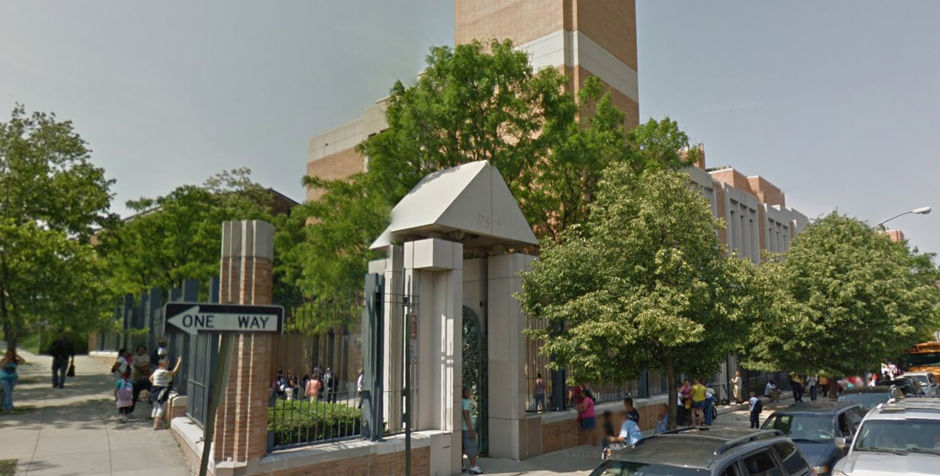
Which brings us to the Bronx Household of Faith case. First Amendment expert Jordan Lorence, who was previously an ACLJ attorney and now works for the Alliance Defending Freedom, has been fighting this case for years. He represents a church serving poor people in the city. The church cannot afford a building big enough to accommodate their religious services, so the church has sought to use vacant after-hours space in the NYC public school system, something that thousands of other groups do every year. But the NYC education system has fought Jordan’s client every step of the way. Even when their arguments have failed in other Supreme Court cases, NYC just tweaks its policy and claims their exclusion of the church is still constitutional. And the Second Circuit lets them get away with it!
The latest NYC rule excludes “religious worship services” from use of school facilities after hours. Never mind that the school – grudgingly – allows religious speech and devotions. Never mind that the school allows other groups to hold rituals and ceremonies, have readings, share meals, give testimony, and engage in fellowship and counseling. Never mind that other groups can “worship” sports heroes or movie stars. Somehow, according to the NYC education system, “religious worship services” are like toxic waste that has to be kept out at all costs. And amazingly, the Second Circuit, by a 2-1 vote, ruled that this explicit discrimination against religious speech did not violate either the right to free speech or the right to the free exercise of religion.
The Supreme Court is now the Bronx church’s last hope. Our friend and ally Jordan Lorence has filed a petition for certiorari requesting the Supreme Court to review this case. And here at the ACLJ, we were glad to file a brief supporting the petition for review.
In our amicus curiae brief, which is available here, we remind the Supreme Court that the Second Circuit has been “notorious” in rejecting the equal access doctrine. In the Bronx Household case, we point out, the Second Circuit even claims it was the Supreme Court, not the Second Circuit, that has “deviated” on this issue. Worse still, we observe, the Second Circuit has invented several new doctrines to justify its result, doctrines which threaten to mess up the law in this area unless the Supreme Court intervenes.
First, the Second Circuit erred by, in effect, making a theological judgment and using that judgment against the church:
Yes, religious worship services are special – but in ways cognizable to theology, not civil adjudication. It is not the business of the federal judiciary to determine what “consecrates a place”. The Second Circuit therefore erred by ruling that worship services are, in effect, expressive activities that are so special that they can be discriminated against. . . . A school need not allow food to be brought onto its premises by outside groups. But if it does so, it cannot treat a Seder meal differently from a Halloween meal just because the former has profound religious meaning. To exclude the rite of Baptism while allowing bobbing for apples is not to evince concern about water splashing on heads or floors, but to discriminate against an (expressive) activity because of the religious perspective of that activity.
Second, the Second Circuit said that NYC could excuse its discrimination by claiming that it feared that allowing the church to conduct worship services might violate the Establishment Clause. This is wrong:
What the Second Circuit has done is to generate a “shadow” or “force field” around that Establishment Clause that would have censorious legal effect, at the expense of a speaker’s rights, even when there would be no violation of the Establishment Clause.
Third, the Second Circuit faulted the supposed “bias” in favor of Christianity of allowing churches to hold services after hours, since school spaces were more likely to be available on the weekend, when Christian churches typically meet. Our response:
The Second Circuit’s gripe, however, is not with the school’s access policy, but with the seven-day week itself (and the corresponding weekend). That the school chooses to close for regular educational activities on the same days virtually every government office (including courts) closes is not the church’s fault and provides no basis for discriminating against private users in a governmental effort to “even the score” among religions.
Fourth, the Second Circuit ruled that it is okay for the school system to investigate church activities in order to ferret out forbidden “religious worship services”. Once, more, the court got it wrong:
there is no constitutional objection when the government scrutinizes its own speech to determine if it has crossed the Establishment Clause line. But there is no such thing as private speech being “too religious” for the First Amendment; hence, government review of private speech for religiosity, with a view to potential discrimination and exclusion, is not only unjustified but positively forbidden as content- or viewpoint-based censorship.
New York’s education department gets to respond to the petition (and to our amicus brief) at the end of November. The church will have a couple of weeks to respond. Then it will be up to the Supreme Court to decide if it wants to review the case. If the Supreme Court does grant review, the ACLJ will be there to help.